
The AI Sana program
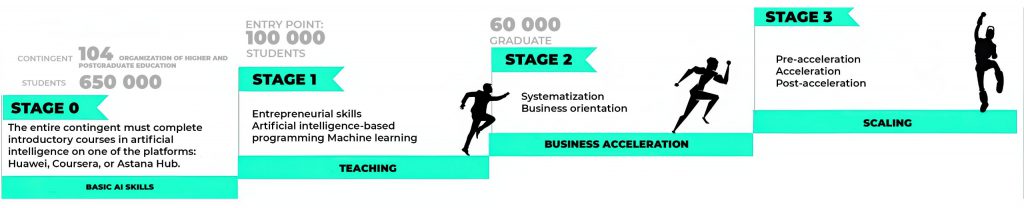
The AI Sana program is a large-scale government initiative of Kazakhstan, launched by order of President Kassym-Jomart Tokayev and the Ministry of Science and Higher Education in December 2024. The program aims to train highly qualified specialists and develop the country’s artificial intelligence ecosystem.
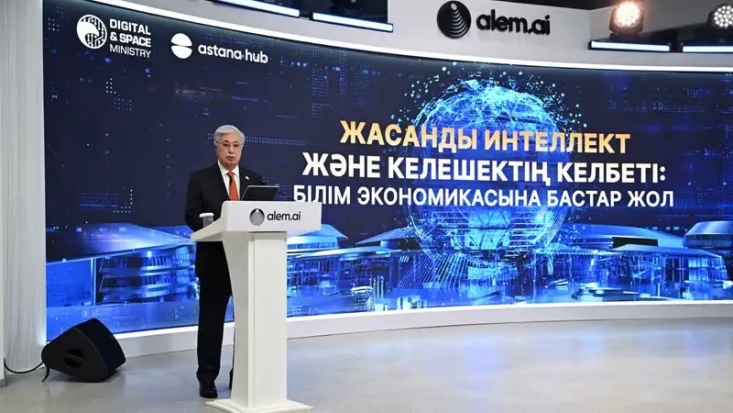
“Domestic and international educational programs in AI technologies can contribute to strengthening our country’s human resources. I instruct the Government to consider the phased implementation of the AI-Sana program for training specialists in artificial intelligence. The program should foster the formation of a dynamic ecosystem combining education, research, and startup development. It is essential to leverage the acceleration experience of leading global universities. We must communicate the benefits of artificial intelligence to every resident of Kazakhstan, explain its purpose, and explain how to apply it effectively.”
Read more.
- Kassym-Jomart Tokayev
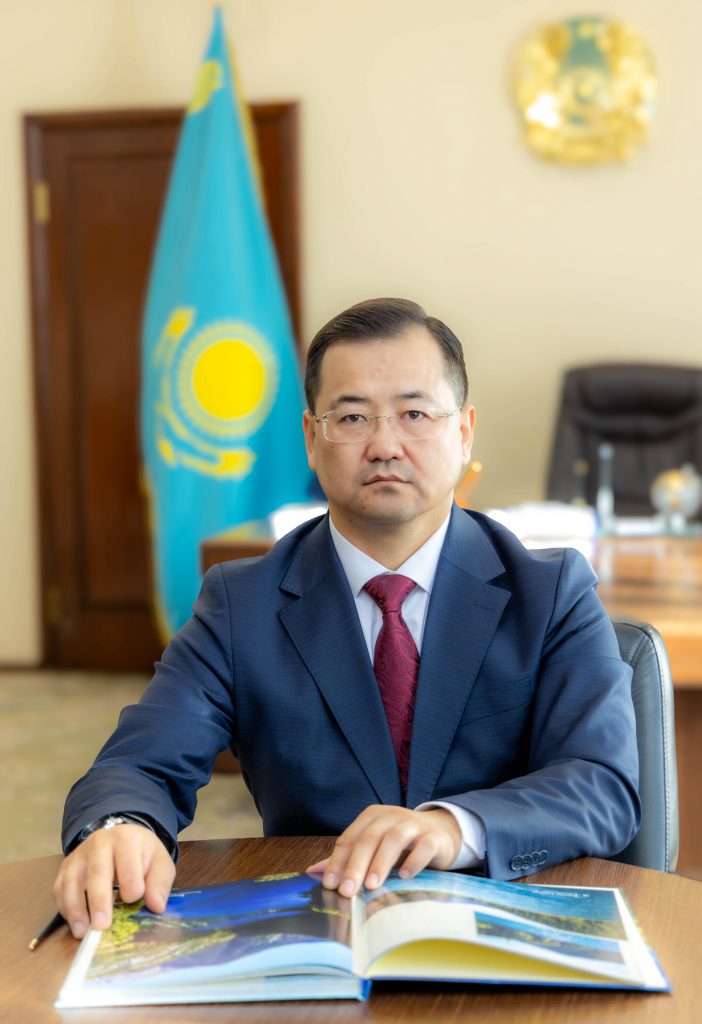
«The introduction of AI into the educational process
Read more.
Buribaev Ermek Abiltaevich
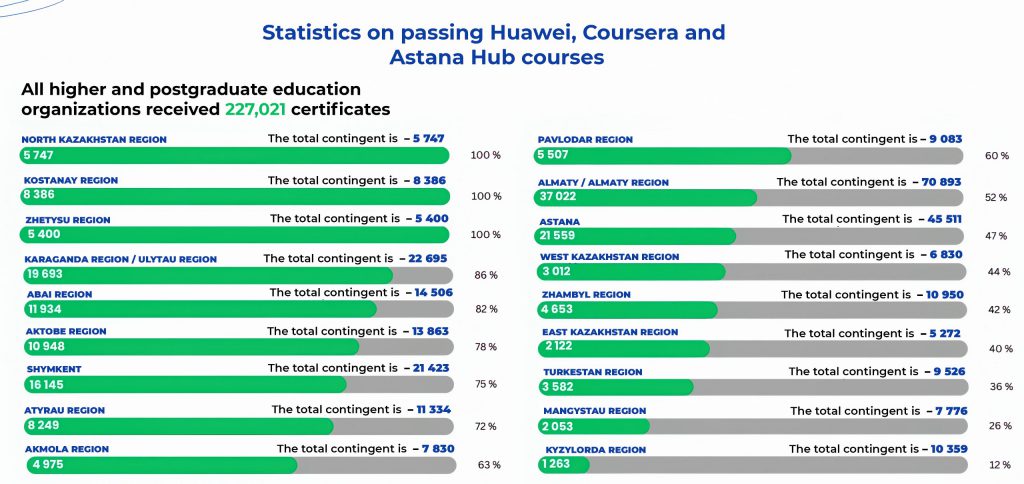
As part of the AI-Sana project, Zhetysu University trained and certified 5,400 students on the effective use of artificial intelligence technologies in the educational process.
Participation in the project involves the development and implementation of software using artificial intelligence technologies into the university’s educational process. Five AI agents are planned to be launched in 2025.
№ | Name of the AI agent | Purpose | Implementation period | Information on the progress of the AI agent implementation |
1 | Aurora | A voice assistant that can recognize and interpret natural speech and perform various tasks based on user requests. | fourth quarter of 2025 | The project is under development. |
2 | Assistant of the digital platform “Smart Zhetysu” | AI agent will allow providing advisory and curatorial assistance to students: | fourth quarter of 2025 | The full version is available at the link. |
3 | ZU Connect | A Telegram software chatbot for applicants and students, providing quick access to information, automated responses, registration for courses and events, and integration with university systems. Students and applicants find it difficult to find relevant information, and staff are overloaded with similar requests. Chatbot automates responses, reducing the workload on employees and providing round-the-clock access to data. | fourth quarter of 2025 | The project is under development. |
4 | Multimedia | The project aims to create animation and video content using artificial intelligence technologies to automate scripts, generate visual effects, voice acting and editing. AI will speed up production, reduce costs and personalize content, making it accessible to a wider audience, including advertising, educational and entertainment formats. | fourth quarter of 2025 | The project is under development. |
5 | AI Game studio | Video game development using artificial intelligence to automate the generation of game worlds, scenarios, characters, animation, and voice acting. AI speeds up the development process, reduces costs, and allows for personalized gaming experiences by creating adaptive gameplay and dynamic content across genres and platforms. | fourth quarter of 2025 | The project is under development. |
All data and research results from the Research Institute of Biotechnology and Ecology, as well as from the university’s research laboratories and leading scientists, are undergoing a systematic digitalization process and are posted on the Digital Science Portal.